Three days at the desk, two days at home, one pair of shoes trying to survive it all. Hybrid Quick tip: If a shoe takes longer to put on than your call took to start, it is not built for hybrid life.work broke a lot of rules, and your shoe rack is quietly paying the price. One day calls for formal polish, the next barely asks you to leave the couch, and your footwear is expected to keep pace with both.
Here is a quick breakdown of what actually works when it comes to sandals for women and men for hybrid office life.
1. The “Video Call to Kitchen Run” Test
Table of Contents
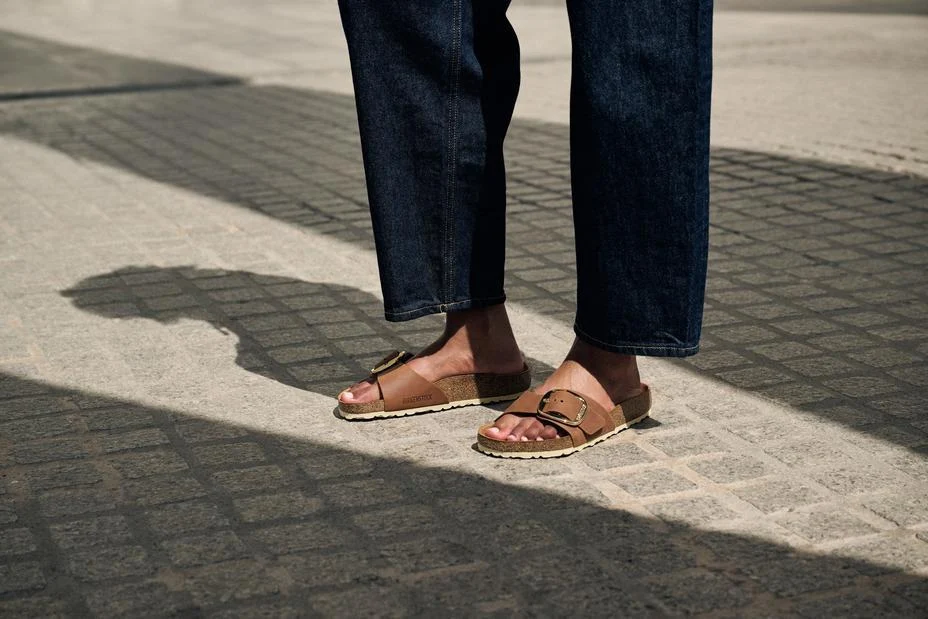
Hybrid footwear needs to do double duty: look put together on camera, feel like nothing the second you stand up for coffee. This is where slip-on styles earn their keep. A two-strap sandal, for instance, lets you adjust fit without fiddling with laces between meetings, which matters more than people admit.
2. Sandals for Women: The Quiet MVP of Home-to-Office Days
Sandals for women have moved well past the “beach only” label. On a work-from-home Tuesday that suddenly turns into an office Wednesday, an open sandal with proper foot strapping bridges both worlds without needing a wardrobe rethink. Think structured straps, a contoured footbed, and a shape that reads smart under trousers or a dress. The Birkenstock Gizeh is a familiar example here: a single-strap silhouette that stays polished enough for a desk day and relaxed enough for a school run afterwards.
3. Best Men’s Footwear for the In-Between Days
For the best men’s footwear pick in a hybrid wardrobe, versatility beats formality. A stiff leather brogue is fantastic for a client pitch and fairly punishing for a home office floor. What tends to work instead is a closed-toe, low-maintenance silhouette that pairs with chinos on Monday and joggers on Friday. The Birkenstock Boston clog fits this brief neatly, closed enough for meetings, easy enough to kick off under a desk.
4. Classic Footwear Never Actually Left the Chat
There is a reason classic footwear keeps resurfacing in every “what to wear to work now” conversation. Simple silhouettes, neutral tones, and a fit that does not demand a second thought age well across seasons and screens. Classic footwear also photographs better on video calls, oddly enough, because busy detailing tends to distract on a webcam feed.
5. Comfort Is a Function, Not a Feeling
Skip the “shoes that hug your soul” language. What hybrid workdays actually need is footbeds that support natural foot movement across a day that includes sitting, standing, walking to the printer, and occasionally sprinting for a delivery at the gate. A contoured cork footbed, seen in styles like the Birkenstock Mayari, is a practical example of comfort built into structure.
6. The One-Shoe Wardrobe Myth
Nobody actually owns one perfect hybrid shoe, and that is fine. Most people land on a rotation: one closed style for cooler office days, one open sandal for warmer ones, and one classic footwear staple that quietly works with almost everything. Rotation, not perfection, is the real hybrid hack.
7. Try the “Commute Test” Before You Buy
Before adding anything to your hybrid rotation, imagine wearing it on a 20-minute commute, then straight into a four-hour desk stretch. If that mental image includes wincing, keep shopping. If it does not, you have probably found a keeper, whether that is a structured sandal or a well-built closed shoe.
The Takeaway
Hybrid office life rewards footwear that adapts rather than impresses. Sandals for women and the best men’s footwear picks that work hardest today share one thing: they are built for movement between spaces, not just one setting. Classic footwear, in the end, remains classic because it never asked you to choose.